
2026 Functional Ingredient Trends in Australia and NZ
Updated: Aug 13
Functional product development in Australia and New Zealand is becoming more disciplined. Brands still want novelty, but manufacturers and consumers increasingly reward products that deliver a clear daily purpose, fit an enjoyable format and explain ingredient quality in plain language.
The most useful 2026 trends are therefore not single fashionable ingredients. They are design directions that connect consumer need, formulation performance, compliance and a believable supply story.

The strongest 2026 concepts combine a clear benefit with a practical format and defined specification.
1. Benefit-led products are replacing ingredient-led launches
A list of popular ingredients is not a product concept. Stronger briefs begin with an occasion—morning focus, afternoon energy, digestive comfort, evening calm, beauty, hydration or recovery—and then select ingredients that can work together at realistic doses.
Consumer occasion | Ingredient direction | Commercial format
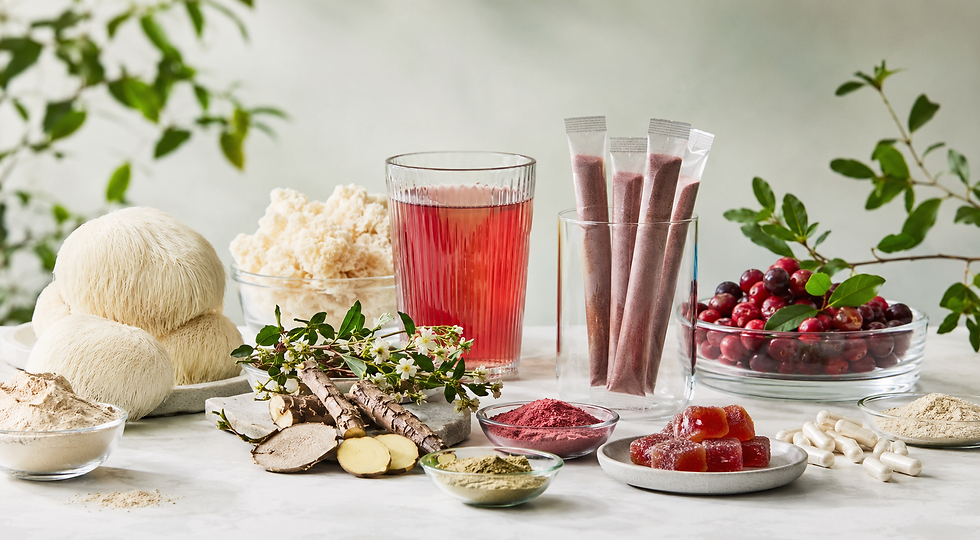
Consumer occasion: Calm focus • Ingredient direction: L-theanine systems, lemon balm, saffron and selected adaptogens • Commercial format: Gummies, stick packs and low-sugar drinks
Consumer occasion: Natural energy • Ingredient direction: Tea-derived caffeine, Rhodiola, beetroot and fruit powders • Commercial format: Shots, powders and functional beverages
Consumer occasion: Digestive routine • Ingredient direction: Prebiotic fibres, ginger, artichoke and gentle botanical blends • Commercial format: Sachets, capsules and daily powders
Consumer occasion: Beauty from within • Ingredient direction: Tremella, grape seed, pomegranate and vitamin-C-rich fruit extracts • Commercial format: Beauty drinks, gummies and capsules
Consumer occasion: Active recovery • Ingredient direction: Tart cherry, turmeric, beetroot and Cordyceps concepts • Commercial format: Sports powders and recovery shots
2. Fibre and digestive health are moving into everyday formats
Digestive products are expanding beyond high-dose powders and specialist supplements. Product teams are considering smaller daily serves, flavoured sachets, bars and beverages. The technical challenge is balancing a meaningful fibre dose with mouthfeel, sweetness, viscosity and consumer tolerance.
Botanical ingredients can add flavour, antioxidant positioning or traditional familiarity, but they should not distract from the core performance of the fibre system. Bench testing in the actual matrix is essential.
3. Natural energy is becoming more nuanced
Consumers still want performance, but many brands are moving away from a simple high-caffeine proposition. The opportunity is controlled energy combined with focus, hydration or stress resilience. Tea extracts, Rhodiola, beetroot and flavour-compatible botanicals can support differentiated concepts when dose, caffeine declaration, bitterness and claims are handled correctly.
4. Functional mushrooms are becoming specification-driven
Lion’s mane, reishi, Cordyceps and tremella remain attractive, but professional buyers are asking better questions: fruiting body or mycelium, extraction method, beta-glucan method, starch content, carrier use, species identity and country of origin. “Mushroom powder” is no longer a sufficient specification for a premium product.
5. Beauty is moving into beverages and hybrid wellness products
Beauty-from-within products increasingly combine appearance with hydration, stress, sleep or gut-health positioning. This creates room for botanical antioxidants and polysaccharide-rich extracts, but the product must still taste good and stay stable. Colour, acidity, sediment and packaging light exposure can be as important as the ingredient story.
6. Clean-label claims are becoming procurement specifications
Teams are translating broad terms such as natural and clean into measurable requirements: extraction solvent, carrier percentage, processing aids, preservative system, residual solvents, pesticide controls, allergen status and traceability. This makes supplier comparison more objective and reduces surprises after scale-up.
7. Evidence and compliance are moving earlier
In Australia and New Zealand, the intended product pathway affects ingredient suitability and claims. Food and beverage concepts should be screened against applicable food standards and novel-food considerations; therapeutic presentations may require a different assessment. Product category should be decided before commercial quantities are purchased.
A practical 2026 development checklist
Define the consumer occasion and product format.
Set a realistic target dose and serving size.
Choose ingredients using specifications and test methods, not trend alone.
Test taste, colour, solubility and stability in the real base.
Confirm the regulatory pathway and proposed claims.
Review supply continuity, MOQ, lead time and change control.
Related Herbify guides
How Herbify can help
Herbify works with Australian and New Zealand manufacturers, product developers and brands to source botanical extracts and related functional ingredients. Support can include specification matching, samples, technical documents, custom-format discussions and coordination with manufacturing partners.
Regulatory note: ingredient suitability, permitted claims and labelling depend on the final product category, dose, formulation and market. Food, therapeutic, cosmetic and animal-nutrition pathways should be assessed separately. Import conditions should be checked before shipment. This article provides general commercial information and is not medical, legal or regulatory advice.

Comments