
Botanical Extracts for Cosmetic Formulation and Beauty Brands
Updated: Aug 13
Botanical ingredients can give a cosmetic product a distinctive origin story, colour, sensory profile and marketing direction. They can also create unexpected technical and regulatory problems when a food-grade or supplement-grade extract is placed into a topical formula without a cosmetic-specific review.
A successful cosmetic brief must connect the botanical identity with INCI naming, composition, solubility, preservation, contaminants, stability and claims. The ingredient should be selected for the finished emulsion, gel, serum, cleanser or mask—not simply because the herb is fashionable.
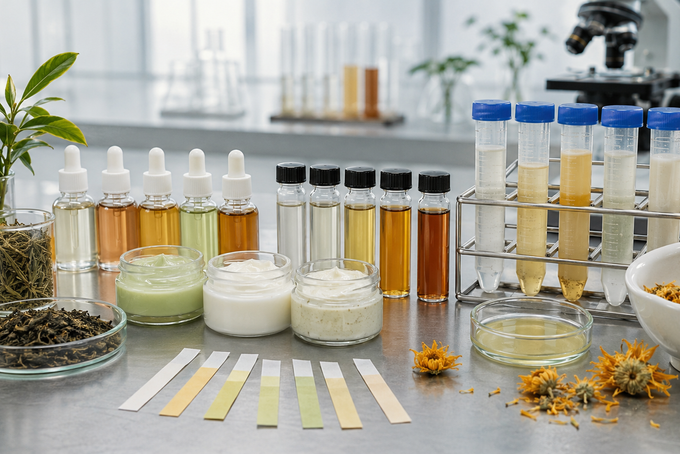
Cosmetic botanical selection should begin with the final formula, use level and intended claims.
1. Start with the cosmetic function and product type
Define whether the extract is being used mainly for antioxidant positioning, soothing, colour, fragrance, moisturising support or brand storytelling. Then document the format, pH, processing temperature, packaging, target use level and intended shelf life.
Formulation question | What to confirm | Why it matters
Formulation question: Identity • What to confirm: Latin name, plant part, extraction process and INCI name • Why it matters: Supports correct documentation and labelling
Formulation question: Composition • What to confirm: Extract solids, solvents, carriers and preservatives • Why it matters: Prevents undeclared formula changes
Formulation question: Solubility • What to confirm: Water, glycol, glycerine or oil compatibility • Why it matters: Reduces sediment, haze and separation
Formulation question: Sensory profile • What to confirm: Colour, odour and tack • Why it matters: Protects the intended consumer experience
Formulation question: Quality • What to confirm: Microbiology, heavy metals, pesticides and relevant allergens • Why it matters: Supports risk assessment and release
2. INCI naming is not a complete specification
An INCI name helps identify an ingredient for cosmetic use, but it does not state concentration, carrier content, preservation system or marker compounds. Two products with a similar INCI description may behave very differently. Buyers should request a full composition statement and technical specification alongside the INCI name.
3. Natural and organic extracts still require regulatory review
In Australia, most cosmetic ingredients—including many natural and organic extracts—are regulated as industrial chemicals for cosmetic use. Importers and manufacturers should determine whether their introductions meet the relevant AICIS requirements. A product marketed with therapeutic claims may fall under a different pathway.
4. Solubility determines when and how the extract is added
A dry water extract may disperse readily but deepen colour or raise microbial risk once reconstituted. A glycerine extract may be easy to dose into a water phase but contribute tack and water activity. Oil-soluble extracts require a compatible carrier and oxidation strategy. The supplier should disclose the full solvent and carrier system.
5. Preservation must be tested in the finished formula
Botanical extracts can introduce water, nutrients, minerals or microbial load. Supplier microbiological limits do not replace finished-product preservation testing. Formulators should assess compatibility with the chosen preservative system and conduct suitable stability and challenge testing.
6. Colour and odour can become commercial constraints
Dark green, brown or red extracts may be acceptable in a mask but unsuitable in a pale serum. Strong herbal odours can change fragrance performance. Ageing, heat and light may intensify colour. Always request representative samples and test at the intended use level.
7. Claims must match cosmetic presentation
Language about appearance, cleansing, moisturising, conditioning or maintaining skin in good condition is different from a claim to treat disease or modify a physiological process. Marketing, packaging and website copy should be reviewed together, because the overall presentation influences how the product is classified.
Botanical directions for beauty brands
Green tea: familiar antioxidant positioning, with colour and caffeine considerations.
Centella: strong skincare recognition; species, solvent and composition should be defined.
Licorice: formulation value depends on the extract type and proposed claims.
Tremella: useful for hydration-oriented storytelling; confirm extract composition and preservation.
Pomegranate and grape seed: polyphenol positioning, with potential colour and stability effects.
Supplier approval checklist
Confirm INCI name and full composition.
Review identity, plant part, solvent, carrier and preservation.
Assess AICIS and final product classification.
Test compatibility at target pH and use level.
Complete stability, packaging and microbiological validation.
Approve claims only after the final formula is fixed.
Related Herbify guides
How Herbify can help
Herbify works with Australian and New Zealand manufacturers, product developers and brands to source botanical extracts and related functional ingredients. Support can include specification matching, samples, technical documents, custom-format discussions and coordination with manufacturing partners.
Regulatory note: ingredient suitability, permitted claims and labelling depend on the final product category, dose, formulation and market. Food, therapeutic, cosmetic and animal-nutrition pathways should be assessed separately. Import conditions should be checked before shipment. This article provides general commercial information and is not medical, legal or regulatory advice.

Comments